Hard Floors, Hollow Feelings: The Quiet Case for Softening the Sound of Your Home

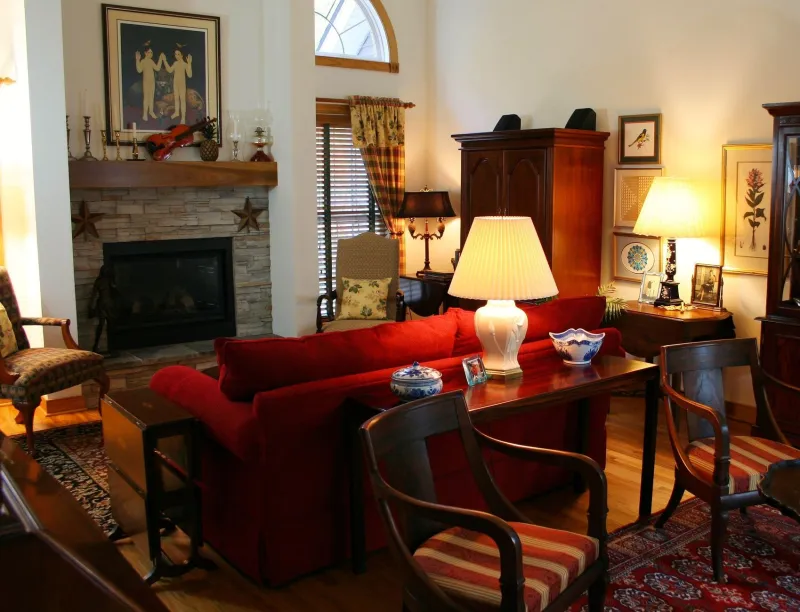
Photo: Shixart1985, CC BY 2.0, via Wikimedia Commons
You know the sound. You step into a room — maybe one you’ve lived in for a year — and something about it feels thin. You clap, and the clap comes back with a shimmer, like the room is answering you. On a phone call you hear your own voice arrive half a second late. Talking in there feels a little like performing.
That shimmer is reverb. It’s your voice hitting drywall, glass, and sealed hardwood and bouncing back instead of being absorbed. And it’s one of the most overlooked reasons a room that looks finished still feels strangely incomplete.
The problem is invisible, which is why we blame everything else
When a room feels off, we reach for the visual fixes: repaint, restyle the shelves, buy a bigger piece of art. Sound doesn’t show up in a photograph, so it never makes the to-do list. But your ears are running a constant read on the room, quietly telling you whether the space feels enclosed or hollow.
In a typical home, a room’s reverb time — how long a sound takes to fade by roughly 60 decibels — lands near half a second in a comfortable living room and closer to a full second or more in a stripped-down one. Half a second feels intimate. A full second feels like a gymnasium. Same square footage, same budget, entirely different experience of home.
The good news: you don’t need acoustic panels or a contractor. Soft furnishings do the work, one layer at a time.
Floors first, because that’s where the most reflection lives
Hard flooring — hardwood, tile, luxury vinyl — reflects almost everything that hits it. A rug is the highest-impact, lowest-effort fix in the house.
Aim to cover a meaningful share of the open floor in a living or dining room, roughly a third to a half. Size matters more than style: an 8x10 under a seating group beats a precious 5x8 floating in the middle with bare floor around it, because the exposed perimeter is what keeps bouncing sound back.
Don’t skip the pad. A quarter- to three-eighths-inch felt or rubber pad does almost as much acoustic work as the rug itself, keeps the rug from creeping, and protects the finish underneath. If your living room opens into a hallway, a runner is the cheapest continuity you can buy. In a basement office, carpet tiles let you cover the whole slab without committing to wall-to-wall.
Curtains, hung like you mean it
Window glass is a mirror for sound. Curtains work best when there’s enough fabric to actually interrupt the wave: plan on roughly twice the window width in fullness, hang the rod four to six inches above the frame, and let panels reach the floor or just kiss it. Flat, skimpy panels are decoration. Gathered, lined panels are acoustics.
Layering helps. Sheers alone soften the highs; a heavier outer panel adds body. If you already have blinds, hang decorative panels anyway — you’re not trying to block light, you’re trying to break up a hard plane.
Upholstery is acoustic equipment you already own
Fabric absorbs. Leather and vinyl reflect. That’s the whole principle, and it means your sofa is doing quiet labor every day.
Deep seats, loose cushions, and textured weaves — bouclé, wool, linen blends — soak up more sound than a tight leather club chair. Upholstered dining chairs instead of all-wood seats make dinner conversation noticeably easier. An upholstered headboard calms a bedroom. An ottoman in the middle of a hard-floored room works like a small rug in three dimensions.
You rarely need to replace anything to get this benefit. A slipcover, two new pillow covers, or one upholstered bench can change how a room sounds.
The bookshelf trick, explained
Bookcases work because they’re irregular. Books of different heights, boxes, ceramics, and framed photos scatter sound in a dozen directions instead of letting it ricochet off a flat wall.
Fill shelves about two-thirds full, vary the depth, and skip glass-front cabinets — glass adds back the reflection you just removed. Open shelving with a few baskets works just as well and is easier to keep tidy.
Small stuff that quietly adds up
Table linens in a dining room, fabric lampshades instead of metal ones (metal shades bounce sound straight up), canvas art rather than glazed prints, houseplants, and felt pads under chair legs all contribute. None of them alone will fix an echo. Together they take the edge off.
A room-by-room plan
Living room: area rug plus pad, lined curtains, at least one upholstered anchor piece, and a bookcase against the hardest wall.
Dining room: rug under the table (low-pile for chair clearance), tablecloth or runners, upholstered seats, and something soft on at least one wall.
Bedroom: the bed itself is your biggest absorber. Add a rug that extends beyond the bed frame, curtains, and a fabric headboard. Bedrooms almost never need more than that.
Home office: hard floors plus hard desk plus video calls is the worst combination in the house. Rug, curtains, and a fabric chair fix most of it — which also means clients stop hearing your room instead of you.
Hallways and stairs: narrow and hard by design. A runner, one piece of framed canvas, and a textile hanging do more than you’d expect.
Kitchen: you can’t carpet a kitchen. A washable runner, fabric window treatments, and a cork board or two are your realistic moves.
Where softening goes too far
Over-absorb and a room dies. Conversation feels flat, music loses its life, and the space starts to feel oddly muffled. Don’t carpet over carpet, don’t paper every wall in foam squares, and keep some hard surfaces to reflect a little energy back.
And use common sense: never cover vents, radiators, or registers, keep fabric well away from space heaters and candles, and don’t block a door or window you need for safety.
Three budgets
Under $75: a pad under the rug you already own, a tablecloth, a couple of fabric pillow covers, and moving a bookcase to the emptiest wall.
$75–$400: a properly sized area rug, floor-length panels in the living room, and an upholstered ottoman or bench.
$400 and up: a large rug with a real pad, lined curtains in every hard room, upholstered dining chairs, and a taller bookcase you actually fill.
Then go stand in the doorway and clap again. A finished room doesn’t echo back at you — it answers softly and lets you get on with your evening.