The Room Isn’t Flat — Your Lighting Is: A Practical Fix-It Guide

Here is a design opinion worth arguing about: lighting is the most overlooked piece of furniture in the American home. We spend weeks choosing a sofa, months debating paint colors, and then we light the whole room with one builder-grade ceiling fixture. Then we wonder why the space feels flat.
Lighting is not a finishing touch. It is a structural part of how a room feels. It changes the color of your walls, the texture of your rug, the usefulness of your reading chair, and the mood at 8 p.m. on a Tuesday. If a room looks good in photos but feels harsh in person, lighting is usually the culprit.
Lighting Is Furniture, Whether You Treat It That Way or Not
A floor lamp occupies space. A table lamp creates a pool of light and a visual anchor. A sconce adds a vertical line. These are design decisions, not electrical afterthoughts. When you treat lighting as furniture, you stop asking ‘where is the outlet?’ and start asking ‘where do I want to sit, read, eat, and talk?’
The ceiling light is not the enemy. It is just one layer. The problem is when it is the only layer.
The Three-Layer Rule, and Why One Layer Fails
Most rooms need three kinds of light: ambient, task, and accent. Ambient light fills the room. Task light helps you read, cook, or work. Accent light highlights art, plants, or architecture. A single overhead light tries to do all three and usually fails at all three.
Add a floor lamp beside the sofa. Put a table lamp on a console. Use a small picture light or adjustable spotlight on art. Put a task lamp on the desk. Suddenly the room has depth. Shadows become soft instead of absent. The room starts to feel like a room instead of a waiting area.
Kelvin Is Not a Personality Test
Bulb temperature is measured in Kelvin, and it changes everything. Around 2700K to 3000K is warm and flattering for living rooms and bedrooms. Around 3000K to 3500K is neutral and useful for kitchens and bathrooms. Anything above 4000K starts to feel clinical in a home setting unless you know exactly why you are using it.
Do not mix wildly different temperatures in one room. A warm lamp next to a cool ceiling light makes both look wrong. Pick a lane, then vary the intensity. Look for a high color rendering index, ideally 90 or above, so wood, fabric, and skin tones do not look gray or sickly.
Dimmers Are Non-Negotiable
A dimmer is the cheapest way to make a room feel expensive. It lets you go bright for cleaning and low for conversation. It turns one overhead fixture into several moods. Check that your bulbs are dimmable and compatible with the dimmer. Smart bulbs can work, but they are not a substitute for a well-placed lamp.
If you rent, a plug-in dimmer or a smart bulb is a reasonable workaround. If you own, putting the main living room light on a dimmer is one of the best small upgrades you can make.
Place Lights for the Furniture, Not the Ceiling
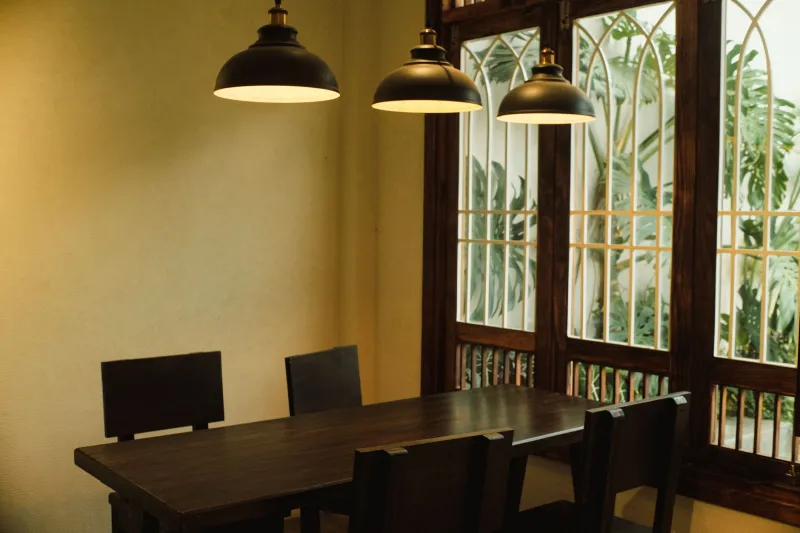
Light should serve the way you use the room. For a sofa, a floor lamp behind or beside it gives you reading light without glare. For art, a picture light or adjustable spot should wash the surface, not blast the frame. For a workspace, put the task lamp opposite your writing hand so your shadow does not fall on the page. For a dining table, a pendant should hang low enough to define the zone but high enough that people can see each other.
This is why lighting belongs in the furniture plan. You would not buy a chair without knowing where it goes. Do not buy a lamp without knowing what it is for.
Fixes for Rooms That Feel Flat
Add a second light source at a different height. Put a floor lamp in a dark corner. Swap a shaded lamp for one with a wider shade. Use a small uplight behind a plant to create a wash of light on the wall. Turn off the overhead light and see what happens. Most rooms immediately feel more layered.
If the room still feels flat, check the walls. Dark paint absorbs light, and a single ceiling fixture cannot carry the room. Add a lamp near the darkest wall. Use a mirror to bounce light, but do not rely on it as a substitute for actual lighting.
Fixes for Rooms That Feel Harsh
Harsh light usually comes from bare bulbs, cool temperatures, and downlights aimed directly at seating. Add a shade. Lower the Kelvin. Put the light on a dimmer. Use multiple low sources instead of one bright source. Move a downlight away from the sofa if you can, or soften it with a diffuser.
If your ceiling light is the only option, choose a fixture with a diffuser rather than exposed bulbs. Add a lamp even if the overhead is on. Two soft sources beat one hard source every time.
A Simple Shopping List
Start with a dimmer and warm bulbs. Add one floor lamp for the living room and one table lamp for a console or side table. Add a task lamp for the desk or kitchen counter. If you have art, add a picture light. If you have a dark corner, add a small uplight. That is not a lighting redesign. It is a furniture upgrade.
The Takeaway
A beautiful room with bad lighting will always feel unfinished. A simple room with layered, warm, dimmable light will feel intentional. Before you buy another pillow, look at the light. It is the piece of furniture you never notice until it is wrong.