Stop Buying Your Kids a Childhood and Start Buying Them a Home: A Smarter Furniture Guide for Parents
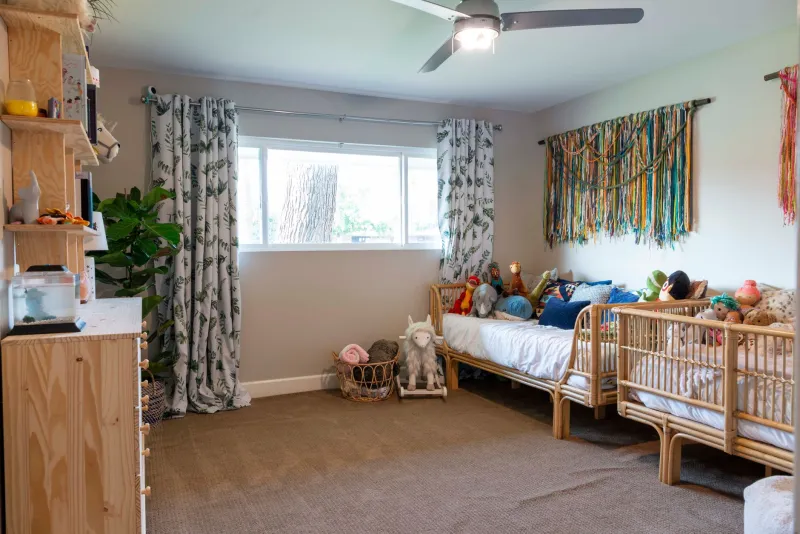
Somewhere between the baby shower and the first day of kindergarten, a lot of parents end up spending a truly wild amount of money on furniture that has a shorter lifespan than a goldfish. The cartoon-themed dresser. The toddler-sized table that's useless by age six. The loft bed with the built-in slide that seemed magical in the showroom and became a lawsuit waiting to happen by year two.
None of this makes you a bad parent. It makes you a human being who got hit with a very specific kind of marketing — the kind that wraps a $600 purchase in the language of love, memory, and childhood magic. But here's the thing nobody tells you in the furniture aisle: your kid doesn't actually need a bedroom that looks like a movie set. They need a room that works, grows with them, and doesn't require a full overhaul every few years.
Let's talk about how to tell the difference.
The Psychology Behind the Overspend
Kids' furniture exists at a strange emotional crossroads. You want their space to feel special. You're also exhausted, possibly sleep-deprived, and standing in a store where everything is designed to look adorable. Add a child who has opinions, and suddenly you're loading a racing car bed into a minivan.
The furniture industry knows this. Themed collections, coordinated sets, and age-specific sizing all push you toward buying more, sooner, and again. The message is subtle but consistent: this stage of childhood deserves its own furniture. And while that's not entirely wrong, it's also not entirely honest about the cost.
The average American family moves or significantly redecorates a child's room at least twice before that kid turns 12 — once out of the nursery phase and once out of the little-kid phase. If you're buying full sets each time, you're looking at serious money going to pieces that have a functional lifespan of maybe four years.
What Actually Needs to Be Kid-Specific (And What Doesn't)
Not everything in a child's room needs to be built for a child. Some things genuinely do — and it's worth being clear about which is which.
Things worth buying kid-scaled or child-specific:
- A low bed frame or floor-level sleeping option for toddlers (safety is real)
- A small desk or table at the right height for early childhood homework and art
- Storage solutions sized for their stuff — bins, low shelving, accessible hooks
Things you can absolutely buy adult-sized from the start:
- Dressers — a well-made six-drawer dresser works at age four and age forty
- Bookshelves — a sturdy, neutral shelf unit doesn't care how old the reader is
- A twin or full bed frame — kids grow into full-size beds faster than you think, and a simple, solid frame in a neutral finish can follow them from childhood through college
The rule of thumb: if the item's function doesn't change as the child grows, buy the grown-up version now.
The Durability Test Nobody Talks About
Here's a quick mental checklist before any kids' furniture purchase:
1. Can this piece live in a different room someday? A white dresser can move to a guest room. A dresser shaped like a castle cannot. If the piece has a future outside the kids' room, it's worth more.
2. Is this solid wood, metal, or high-quality composite — or is it basically cardboard? A lot of budget kids' furniture is made from MDF or particleboard with a paper veneer. It won't survive the abuse a child puts it through, and it can't be refinished or repaired. Spend a little more on something with bones.
3. Does this item require a specific aesthetic to make sense? A bright red race car bed only looks right in a race car room. A clean-lined platform bed in a warm wood tone looks right in almost any room, at any age. Flexibility is value.
4. Can I adjust it? Convertible cribs that become toddler beds and eventually full-size frames are genuinely worth the price premium. Adjustable-height desks are worth it. Anything that physically adapts to your child's growth extends its useful life significantly.
The Nursery Trap
Nursery furniture deserves its own section because it's where the biggest emotional spending happens and where the value evaporates fastest.
A nursery is a room for an infant. Infants become toddlers. Toddlers become kids who want dinosaurs or soccer balls or whatever TikTok has decided is cool that season. The full matching nursery set — crib, dresser, changing table, glider, nightstand — can run anywhere from $1,500 to $5,000 or more, and within 18 months, half of it is already obsolete.
The smarter approach: buy the convertible crib (worth every penny), skip the matching dresser in favor of something solid and neutral that can live in the room for the next 15 years, and skip the dedicated changing table entirely — a changing pad on top of any sturdy dresser works just as well and doesn't become furniture junk after year one.
The glider or nursing chair is actually one of the better nursery investments, because a comfortable, well-made upholstered chair can move to a reading corner, a bedroom, or a living room long after the nursing stage is done.
Building a Room That Grows Up With Your Kid
The goal isn't to furnish a child's room once and never touch it again — kids' tastes change and their needs evolve. But you can build a foundation that stays put and layer in the personality with things that are easy and cheap to swap out.
Think of the big pieces — bed, dresser, shelving — as the permanent layer. These should be neutral, durable, and timeless. Think of the personality — bedding, rugs, wall art, throw pillows, a lamp — as the seasonal layer. A $30 duvet cover swap and some new posters can completely transform a room without touching a single piece of furniture.
This approach also teaches kids something genuinely useful: that a space doesn't have to be replaced to feel new. That's a design lesson worth having.
The Long Game
The best kids' furniture isn't the stuff that makes the room look like a Pinterest board. It's the stuff that's still standing when your kid leaves for college, can be repurposed into a guest room without looking ridiculous, and didn't require you to finance a room makeover every four years.
A well-made dresser, a solid bed frame, a bookshelf that can hold anything — these aren't boring choices. They're investments in a room that can actually live and breathe and change with the person inside it.
Your kid doesn't need a themed childhood. They need a home that works. And honestly? So do you.