Design Your Way to Better Days: How Your Living Space Affects Sleep, Focus, and Mood
Most of us spend a lot of time thinking about wellness in terms of what we eat, how much we move, and how many hours we sleep. But there's a factor that tends to fly under the radar: the physical environment we come home to every night. Your living space isn't just a backdrop for your life — it's actively influencing your stress levels, your ability to focus, the quality of your sleep, and even how happy you feel on a random Tuesday afternoon.
The good news? You don't need a gut renovation or a designer on retainer to make meaningful changes. A lot of what shapes how a room feels comes down to relatively simple decisions about furniture, light, materials, and layout. Let's break it down.
The Light Problem (And Why It Matters More Than You Think)
Lighting is probably the most underestimated design element in most American homes. We tend to rely on a single overhead fixture to do all the heavy lifting — and it's doing us no favors.
Here's the science in plain terms: our bodies respond to light as a biological cue. Bright, blue-toned light (like overhead fluorescents or cool-white LED bulbs) signals alertness and keeps cortisol levels elevated. That's great at 9 a.m. It's not great at 9 p.m. when you're trying to wind down before bed.
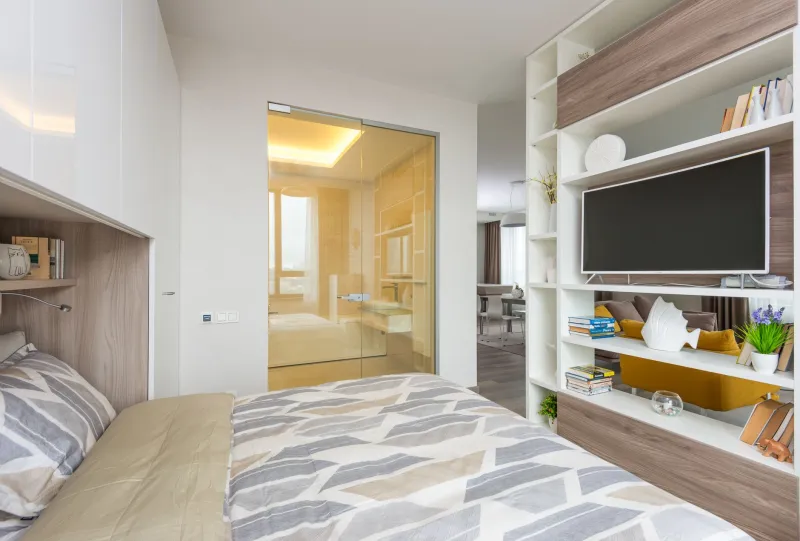
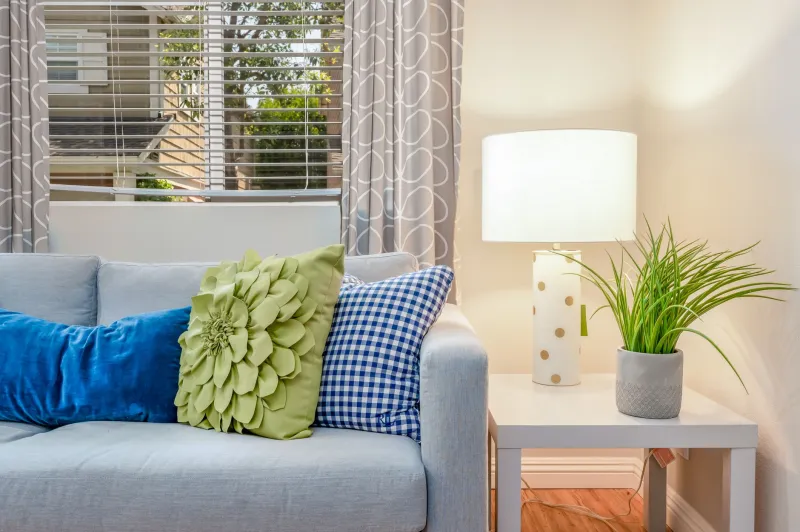
The fix is layered lighting. Instead of one harsh ceiling fixture, aim for multiple light sources at different heights — a floor lamp in the corner, table lamps on side tables, maybe some warm-toned LED strips along a bookshelf. In the evening, switch to warm-toned bulbs (look for 2700K–3000K on the packaging) and dim them down. This simple shift can meaningfully improve your body's ability to transition into sleep mode.
For daytime focus, prioritize natural light wherever possible. Position your work-from-home setup or reading chair near a window. If your space doesn't get much sunlight, a full-spectrum daylight bulb can partially compensate.
Furniture Placement and the Flow of a Room
Ever walked into a room that just felt off — slightly anxious or uncomfortable — without being able to explain why? Chances are, the furniture layout was working against you.
One of the most well-documented principles in environmental psychology is the concept of "prospect and refuge" — humans feel most at ease when they can see what's happening around them (prospect) while also feeling sheltered and protected (refuge). In practical terms, this means positioning your primary seating so it faces the room's entrance rather than having your back to the door. It sounds small, but it can shift the feeling of a room from subtly unsettling to genuinely relaxing.
Clutter and blocked pathways also create low-grade stress. Our brains register visual disorder as unfinished business — it keeps us in a mild state of alertness that's exhausting over time. Clear, open traffic paths through a room and intentional storage solutions (closed cabinets, ottomans with storage inside, built-in shelving) help the brain relax into a space rather than scanning it for problems.
Biophilic Design: Bringing the Outside In
Biophilic design sounds like a buzzword, but the concept is grounded in solid research: humans are hardwired to respond positively to natural elements. Exposure to plants, natural materials, organic shapes, and even images of nature has been shown to lower blood pressure, reduce anxiety, and improve cognitive performance.
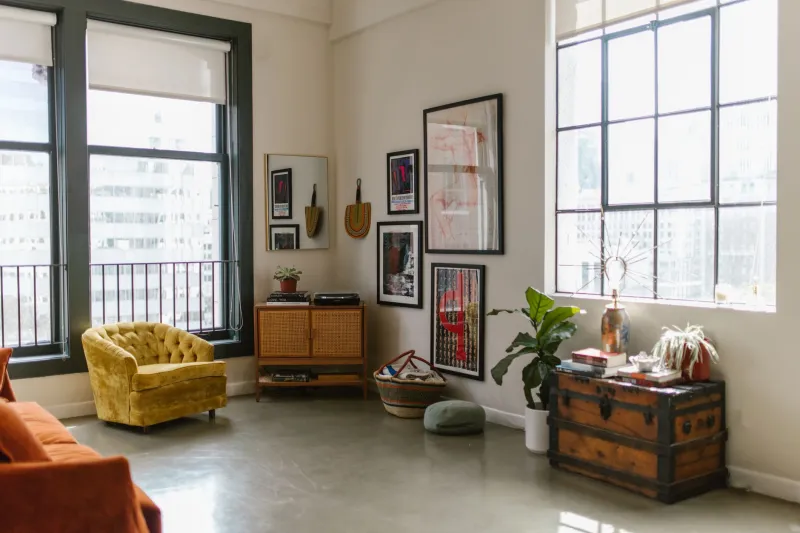
You don't need to turn your apartment into a jungle. A few well-placed houseplants — a pothos on a bookshelf, a snake plant in the corner, a fiddle-leaf fig near a window — can measurably shift the feel of a room. Beyond plants, look for furniture and decor made from natural materials: solid wood, linen, cotton, jute, stone, rattan. These textures and materials create a sensory connection to the natural world that synthetic alternatives simply don't replicate.
Natural color palettes — soft greens, warm browns, muted blues, sandy neutrals — also support this effect. They're not just trendy; they're genuinely easier for the nervous system to process than high-contrast, saturated color schemes.
Ergonomics Aren't Just for Offices
A lot of people invest in a good office chair but then spend their evenings slumped into a sofa that's slowly wrecking their posture and contributing to back pain. Physical comfort and mental well-being are more connected than we often acknowledge — chronic discomfort creates chronic stress.
When choosing a sofa or lounge chair, look for pieces that offer real lumbar support rather than just looking good in a photo. Seat depth matters too: if your feet can't comfortably reach the floor when you're sitting back, you'll unconsciously tense your core and hip flexors to compensate. For reading chairs or home office setups in a living space, consider an adjustable lumbar pillow as a simple, affordable upgrade.
If you work from home and your living room doubles as a workspace, resist the temptation to work from the couch full-time. A dedicated chair with proper support — even a well-chosen accent chair at a small writing desk — will protect both your posture and your ability to mentally "clock out" when the workday ends.
Color Psychology: A Quick Primer
Color affects mood — that much is well-established, even if the specifics are more nuanced than "blue is calm, red is energizing." For living spaces intended to support rest and connection, softer, lower-saturation tones tend to work best. Think dusty rose, sage green, warm taupe, or soft terracotta rather than their bright, high-intensity counterparts.
If a full repaint isn't in the budget, you can introduce color psychology through textiles. A chunky knit throw in a warm oatmeal tone, a set of linen pillow covers in soft sage — these accents shift the emotional temperature of a room without a major commitment.
Small Changes, Real Results
Here's what's worth taking away from all of this: you don't have to overhaul your entire home to feel the difference. Start with one change. Swap out your overhead bulbs for warm-toned dimmable LEDs. Rotate your sofa so it faces the door. Add a plant to your most-used corner. Buy a throw pillow in a color that actually makes you feel something good when you look at it.
A home that supports your well-being isn't about perfection — it's about intention. When you start thinking of your living space as something that actively works for you rather than just around you, even small adjustments start to feel significant. And that's really what living well at home is all about.