Your Home Is Not a Museum: How to Actually Live with the Beautiful Things You Buy
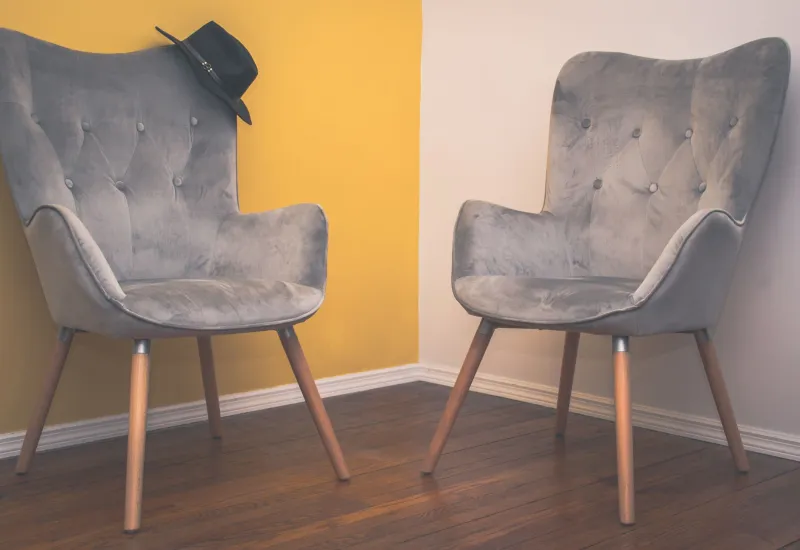
You spent four months looking for the right accent chair. You read reviews, compared fabrics, agonized over the leg finish. When it finally arrived, you placed it just so in the corner of the living room, stepped back, and thought — perfect.
Then you never sat in it.
Instead, you perch on the edge of the couch. You pull up a dining chair when you need extra seating. You tiptoe around the rug underneath that chair like it's a sacred relic. The chair just sits there, looking incredible, completely untouched.
If that sounds embarrassingly familiar, you're in good company. A surprising number of homeowners fall into this exact pattern — buying beautiful things and then quietly refusing to use them. It even has a name: showroom syndrome. And while it might seem like a harmless quirk, it's actually worth unpacking, because it says a lot about how we think about our homes and what we believe we deserve from them.
What Is Showroom Syndrome, Exactly?
Showroom syndrome is what happens when the furniture in your home starts to feel more like a display than a living environment. You treat your best pieces the way a department store treats its floor samples — look, but don't touch. Or at least, don't really use.
It tends to show up most with investment pieces: the velvet sofa in a color you love but are terrified to stain, the designer rug you vacuum obsessively but never let anyone walk on with shoes, the sculptural floor lamp that you haven't turned on because you're saving the bulb. The more money or emotional weight a piece carries, the more likely it is to become untouchable.
Part of this is practical anxiety. Expensive things feel harder to replace if something goes wrong. But a bigger part of it is psychological — and it runs deeper than most people realize.
The Psychology Behind Living Around Your Own Stuff
There's a concept in behavioral psychology called the endowment effect: once we own something, we tend to overvalue it. The more we paid for it, or the longer we searched for it, the more precious it becomes in our minds. And the more precious it becomes, the more we want to protect it — sometimes to the point of not using it at all.
There's also a cultural angle here. A lot of us grew up in homes where certain rooms or certain furniture were off-limits. The formal living room with the plastic-covered sofa. The good china that only came out on Thanksgiving. We absorbed the message early: nice things are for special occasions, not everyday life. That belief doesn't disappear just because you're now the one buying the furniture.
And then there's the aspirational dimension. Sometimes a beautiful piece represents a version of yourself — put-together, tasteful, living your best life — that you're not quite sure you've fully become yet. Using it casually might feel like it diminishes that meaning somehow. So instead, you preserve it. You protect the dream.
The irony is that in trying to protect the beauty of your home, you end up hollowing it out.
What You're Actually Missing Out On
Here's the thing about a chair that never gets sat in, or a rug that never gets walked on: it stops being furniture and starts being decoration. And decoration, by definition, is something you look at — not something you live with.
A home that's genuinely beautiful isn't one that looks like a showroom. It's one that feels alive. It has the warmth of things that are actually used — a throw blanket that's been pulled over someone's shoulders, a coffee table that's held a hundred cups of coffee, a rug that's been the landing spot for lazy Sunday mornings. That lived-in quality isn't damage. It's character. It's proof that your home is doing its job.
When you treat your best pieces like exhibits, you're also robbing yourself of the comfort and pleasure you paid for. That chair was designed to be sat in. That rug was made to be felt underfoot. The whole point of investing in quality is that you get to experience quality — not just own it.
Practical Ways to Give Yourself Permission
Breaking the showroom habit isn't about being careless with your belongings. It's about recalibrating your relationship with them. Here are a few ways to start:
Use the good stuff on a Tuesday. Reserve nothing. Light the nice candle on a random Wednesday night. Sit in the accent chair while you drink your morning coffee. Put the fancy throw blanket on the couch and actually use it. The more you normalize using your best pieces in everyday moments, the less loaded they become.
Reframe what wear means. A little patina on a leather sofa isn't failure — it's aging gracefully. A rug that's been well-loved looks warm, not ruined. High-quality pieces are often designed specifically to develop character over time. Let them.
Address the actual fear. If you're avoiding something because you're genuinely worried about damage, solve that problem directly. Get the rug protector. Buy the fabric guard. Invest in a good furniture insurance plan. Removing the practical obstacle often dissolves the emotional one.
Invite people over. Nothing breaks the museum spell faster than having friends sit on the furniture. Once other people have used your beautiful things without incident, the anxiety tends to ease considerably.
Ask yourself the honest question. If a piece is so precious that you can't actually use it, is it really serving you? Sometimes showroom syndrome is a signal that something isn't quite right for your real life — and that's useful information too.
Your Home Should Work for You
At the end of the day, a home is not a preservation project. It's a living environment — one that should reflect who you are, support how you actually live, and give you genuine pleasure on an ordinary Thursday afternoon.
The most beautifully designed spaces aren't the ones that look untouched. They're the ones that feel fully inhabited. Where the furniture has clearly been used, the rooms have clearly been lived in, and the whole place hums with the energy of a life being actively enjoyed.
You bought those beautiful things because they moved you in some way — because they represented the kind of home, and maybe the kind of life, you wanted. The best way to honor that is to actually live in them.
Sit in the chair. Walk on the rug. Turn on the lamp.
Your home is ready when you are.